When shopping for an air purifier, many homeowners quickly discover two main categories:
- Traditional air purifiers that rely on replaceable filters
- Filterless air purifiers that use other air-treatment technologies
One of the biggest questions buyers ask is:
“Are filterless air purifiers actually worth buying?”
The answer depends on your goals, your budget, your maintenance preferences, and the type of indoor air quality concerns you want to address.
In this guide, we’ll explain how filterless air purifiers work, compare them with filter-based systems, and help you determine whether they’re the right fit for your home.
Table of Contents
- What Is a Filterless Air Purifier?
- How Filterless Air Purifiers Work
- Benefits of Filterless Systems
- Potential Tradeoffs
- Alpine Living Air Purifier Models
- Are They Right for Your Home? (Part 2)
- Frequently Asked Questions (Part 2)
What Is a Filterless Air Purifier?
Unlike traditional air purifiers that depend on disposable filters, many filterless air purifiers use a combination of air-treatment technologies. Depending on the model, these may include:
- Ionization
- Electrostatic collection
- UV treatment
- Activated oxygen (ozone) features where applicable and used according to manufacturer guidance
- Other proprietary technologies
Because designs vary between manufacturers, it’s important to understand the features and maintenance requirements of the specific model you’re considering.
How Do Filterless Air Purifiers Work?
Filterless systems generally do not rely on a disposable HEPA filter. Instead, they use one or more technologies intended to help manage airborne particles, odors, or other indoor air quality concerns.
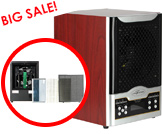
For example, Alpine Living models feature Living Lightning™ Technology and are marketed as requiring minimal routine filter replacement, with maintenance focused on cleaning and servicing components as directed by the manufacturer.
The Biggest Advantages of Filterless Air Purifiers
1. No Disposable HEPA Filters
One of the biggest reasons homeowners choose filterless systems is to avoid buying replacement HEPA filters several times per year.
Potential benefits include:
- Lower recurring filter costs
- Less waste from discarded filters
- Fewer replacement reminders
2. Lower Long-Term Maintenance Costs
Although filterless systems still require regular maintenance, many owners appreciate that they do not need to purchase disposable HEPA filters on a recurring schedule. The exact maintenance depends on the model.
3. Designed for Continuous Operation
Many homeowners prefer operating their air purifier continuously so it can help support indoor air quality throughout the day.
Selected Alpine Living models are designed for ongoing residential use and are intended to operate quietly in homes and offices.
4. Coverage Options for Different Home Sizes


The Living Air Purifier offers several models designed for different room sizes.
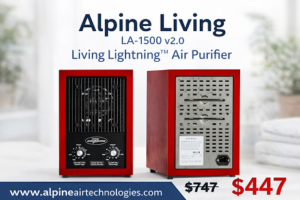
Alpine Living LA-1500 v2.0
Recommended for:
- Apartments
- Bedrooms
- Condominiums
- Home offices
Coverage:
Up to approximately 1,500 sq. ft.
Fresh Air LA-3500 v2.0
Recommended for:
- Larger homes
- Open floor plans
- Families
- Homes with pets
Coverage:
Up to approximately 3,500+ sq. ft.
Potential Tradeoffs to Consider
Filterless air purifiers also have considerations that are important to understand before purchasing.
Technology Varies
Unlike HEPA filtration, which has a standardized definition, filterless air purifiers can use different combinations of technologies depending on the manufacturer. Comparing products requires looking at the specific features and documentation for each model.
Maintenance Is Still Required
Although disposable filters may not be needed, filterless systems still require regular cleaning and maintenance to continue operating as intended. Always follow the manufacturer’s instructions.
Match the Unit to the Room
No matter which technology you choose, selecting a unit with appropriate coverage for your room size is important for overall performance. Community discussions about air purifiers frequently emphasize sizing the unit correctly for the space.
Featured Alpine Living Air Purifiers
Alpine Living LA-1500 v2.0
Best For
- Bedrooms
- Apartments
- Condos
- Offices
- Smaller homes
Highlights
- Living Lightning™ Technology
- Compact design
- Minimal routine filter replacement
- Coverage up to approximately 1,500 sq. ft.
Fresh Air LA-3500 v2.0
Best For
- Large homes
- Open-concept layouts
- Multi-room living areas
Highlights
- Larger coverage area
- Living Lightning™ Technology
- Advanced feature set
- Coverage up to approximately 3,500+ sq. ft.
Questions to Ask Before Buying
Before choosing a filterless air purifier, ask yourself:
- How large is the area you want to treat?
- Are you mainly concerned about dust, pollen, pet dander, odors, or smoke?
- Would you rather clean reusable components than replace disposable filters?
- What maintenance routine are you comfortable with?
- Are you looking for a compact room unit or broader home coverage?
These questions can help narrow your options and ensure you choose a model that fits both your home and your maintenance preferences.
Are Filterless Air Purifiers Worth the Investment?
For many homeowners, the answer is yes—if a filterless system matches their needs and they are comfortable with its maintenance requirements.
Filterless air purifiers are often chosen by people who:
- Prefer not to purchase replacement HEPA filters regularly.
- Want lower long-term filter replacement costs.
- Need a solution for everyday indoor air quality management.
- Are looking for a unit designed for continuous operation.
- Prefer cleaning reusable components over replacing disposable filters.
It’s important to remember that filterless air purifiers and HEPA purifiers use different technologies. Neither is universally better—the right choice depends on the pollutants you’re trying to address and the features of the specific model.
Filterless vs. HEPA: Long-Term Ownership Costs
| Expense | Filterless Air Purifier | Traditional HEPA Purifier |
|---|---|---|
| Initial Purchase | Varies | Varies |
| Disposable Filter Purchases | Typically none on filterless models | Ongoing replacement costs |
| Routine Maintenance | Cleaning reusable components | Filter replacement plus cleaning |
| Waste Generated | Generally lower | Higher due to discarded filters |
| Long-Term Cost | Often lower if filter replacements are avoided | Depends on filter price and replacement frequency |
One of the main reasons people choose a filterless system is to reduce recurring filter purchases over the life of the product.
Maintenance Comparison
Even though many filterless systems do not require disposable HEPA filters, they are not maintenance-free.
Filterless Air Purifiers
Typical maintenance may include:
- Cleaning collection plates or reusable components.
- Wiping the cabinet and air inlets.
- Inspecting internal components.
- Following the manufacturer’s maintenance schedule.
HEPA Air Purifiers
Typical maintenance may include:
- Replacing HEPA filters.
- Replacing activated carbon filters (if equipped).
- Cleaning pre-filters.
- Vacuuming air intakes.
Following the manufacturer’s instructions is essential for either type of purifier to perform as intended.
Which Filterless Air Purifier Is Right for Your Home?
Alpine Living LA-1500 v2.0
Best For
- Apartments
- Bedrooms
- Condominiums
- Home offices
- Smaller homes
Coverage
Approximately 20–1,500+ sq. ft.
Highlights
- Living Lightning™ Technology
- Compact footprint
- Filterless design
- Designed for everyday residential use
Product information indicates this model is intended for smaller living spaces and does not use routine HEPA filter replacement.
Fresh Air LA-3500 v2.0
Best For
- Large homes
- Open-concept layouts
- Families
- Homes with pets
Coverage
Approximately 20–3,500+ sq. ft.
Highlights
- Living Lightning™ Technology
- Electronic controls
- Multiple air-treatment technologies
- Designed for whole-home applications
According to the manufacturer, this flagship model adds features such as UV treatment, photocatalytic technology, and electronic controls compared with smaller models.
Best Applications
Apartments
The Alpine Living LA-1500 v2.0 is designed for smaller spaces and is a practical choice for apartments and condos.
Large Homes
The Fresh Air LA-3500 v2.0 is intended for larger living areas and open floor plans.
Homes With Pets
Pet owners should combine an appropriately sized air purifier with:
- Frequent vacuuming
- Grooming pets
- Washing pet bedding
- Replacing HVAC filters on schedule
Frequently Asked Questions
Do filterless air purifiers really work?
Filterless air purifiers use a variety of technologies to address indoor air quality. Their effectiveness depends on the specific technology, the size of the space, correct operation, and regular maintenance.
Do filterless air purifiers need maintenance?
Yes. Most require periodic cleaning of reusable components even if they do not require disposable HEPA filters.
Are they cheaper over time?
They often have lower ongoing ownership costs because many models eliminate routine HEPA filter replacement, though cleaning and occasional replacement parts may still be required.
Which Alpine model should I choose?
Choose the Alpine Living LA-1500 v2.0 if you have:
- Bedrooms
- Apartments
- Condos
- Home offices
- Smaller homes
Choose the Fresh Air LA-3500 v2.0 if you have:
- Larger homes
- Open floor plans
- Multiple living areas
- Greater coverage needs
Final Thoughts
Filterless air purifiers can be an excellent option for homeowners who want to reduce recurring filter purchases and are willing to perform routine cleaning instead. Models like the Alpine Living LA-1500 v2.0 and Fresh Air LA-3500 v2.0 are designed for different home sizes, allowing you to choose a system that matches your space and lifestyle.
No matter which technology you choose, the best indoor air quality results come from combining an air purifier with:
- Regular housekeeping
- Proper ventilation when outdoor air quality is good
- HVAC maintenance
- Moisture control
- Reducing indoor pollution sources